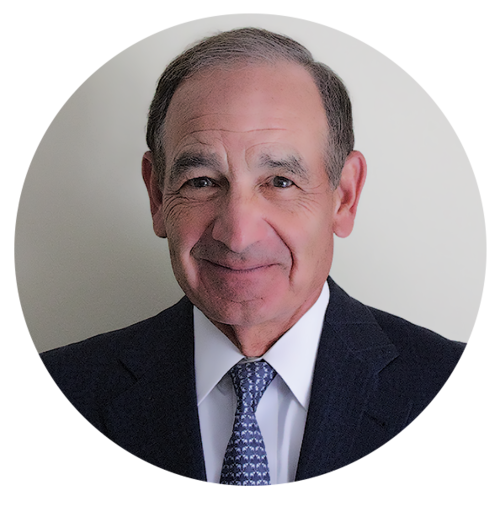
Shelley Hittinger
I am very pleased to be the new President of Beth Sholom Congregation. Please feel free to contact me about any concerns or ideas you may have concerning our community.
You can contact me by phone 215-886-4212 or by email sdhittinger@aol.com
Below is my speech from the Congregational Meeting of June 21, 2012.
Rabbi Merow, Rick, Officers, Members of the Board, Trustees, Congregants and Guests - it is truly an honor to become the 27th President of Beth Sholom and I am grateful for the opportunity to serve this wonderful congregation.
During the past few weeks members of the congregation and others have been coming up to me and offering either their congratulations or their condolences on becoming President. While I appreciate the positive sentiment that they are trying to convey, there is another word—which also begins with the letter ”C”—which probably is more suited, in my mind, to the occasion. The word which I think is more on point is “Commitment.”
Commitment to Judaism was an integral part of my family’s life as I was growing up. As many of you know, my mother taught preschool, and then Hebrew school at West Oak Lane Jewish Community Center. We went to synagogue and our home reflected Jewish values and observances. But my earliest memory of Jewish commitment concerns the holiday of Pesach. I vividly remember sitting on my mother’s lap, at the kitchen table, as a young child, and having her teach me how to memorize the words and the tune to the Four Questions.
As the first grandchild in our family, it was my obligation to recite the Four Questions at both Sedarim. This continued for about 7 years until my cousin Carol took over the responsibility of reciting the Four Questions. I now realize how compelling and rewarding it was to have a personal stake in the Seder and connect with the generations sitting around the table. As the years passed, my Seder role changed from Four Questions reciter, to chief Afikomen negotiator, and finally to Seder leader.
Pesach certainly played a pivotal role in my development as a committed Jew. In fact, a majority of Jews identify with Pesach and attend a Seder, even if they are not observant in other ways. According to the 2012 Jewish Values Survey, conducted by the Public Religion Research Institute, 68% of Jews said that they were planning to participate in a Passover Seder this past year. Strong majorities of nearly every demographic group reported that they were planning to attend a Seder.
So what aspect of the Seder relates to the issue of our commitment to Judaism? This year, as I was preparing for the Seder which I was going to lead, I paused to reflect on the meaning of the following passage and had one of those “eureka” moments.
The passage is:
In Every Generation One Must Look Upon Oneself as if He or She Personally Has Come Out of Egypt.
This verse is from Mishna Pesachim, chap.10, verse 5
What is this verse attempting to tell us? Is it sufficient just to tell the story of the Exodus from Egypt at the Seder table? Or do we have an obligation to do more?
First, it is interesting to note that Biblical Hebrew has no word for history. Modern Hebrew borrowed the word “Historiah” from Greek. The key word of the Bible is not history, but memory. Zachor, the command to remember, occurs time and again in the Torah. This past Shabbat we read the Parsha, Sh’lach Lecha. In the Maftir, the Israelites are told to put fringes on the corners of their garments to remember God’s commandments and observe them. As Dr. Yosef Yerushalmi notes in his book, Zakhor: Jewish History and Jewish Memory, “Only in Israel and nowhere else is the injunction to remember felt as a religious imperative to an entire people.” As a nation, we have a continuing identity so long as we can remember where we came from and who our ancestors were.
But is collective memory enough to ensure the survival of the Jewish people? How can a person remember what did not happen to him personally—at a time and place long before he was born? Zachor signifies more than a consciousness of the past, we remember for the sake of the future and for life. With respect to the Seder, we remember the plight of our ancestors through re-enactment. By living again the events of ancient times as if they were happening now, we shape a connection between our present and the past. We must feel that we have a personal stake in the events that occurred in Egypt in order to feel connected and committed to Judaism.
In Sephardic Haggadot, B’chol Dor VaDor is modified ever so slightly to state: In every generation, each person is obligated to show himself (rather than see himself) as if he personally went out from the slavery of Egypt. The message here is that we need to demonstrate visible, physical changes in our behavior to establish a personal stake in the outcome and forge the bond essential to the survival of the Jewish people.
This evening I want to recognize the sacrifice and dedication of every President, Officer, Auxiliary President and Committee Chair in the 93 year history of our Congregation. Let’s take a moment to recall people such as Anna Levy, who became the first Sisterhood President in 1919; William Ginsburg who served as President of the Men’s Club in 1935; and Benjamin Bornstein who served as President of this Congregation from 1929-1932 and again, from 1937-1938. Each of these congregants gave enormous amounts of their time, effort, wherewithal and creativity to ensure the continuity and vibrancy of this institution. They, too, endured difficult economic times and cataclysmic social change. They had jobs, they raised families and they had responsibilities, yet they managed to maintain a vital congregation for the next generation of Beth Sholom members.
Now it is our moment to decide whether we will be mere spectators in the life of our synagogue or whether we will demonstrate, by our actions, that we have a personal stake in the future of Beth Sholom. Will we be content just to extend accolades to those dedicated congregants who preceded us, or will we be inspired by them to give from our hearts and souls to enable Beth Sholom to serve the needs of our children’s and grandchildren’s generations. The future of Beth Sholom is in your hands. Simply telling and retelling the story of our Congregation’s past successes is not enough to ensure its survival. Each of us must participate fully in synagogue life and leadership to maintain our innovative, vibrant and sacred community here at Beth Sholom for those who will follow us in the years to come.
To be a Jew is to know that over and above history is the task of memory. As Professor Jacob Neusner eloquently wrote: Civilization hangs suspended, from generation to generation, by the gossamer strand of memory. If only one cohort of mothers and fathers fails to convey to its children what it has learned from its parents, then the great chain of learning and wisdom snaps. More than any other faith Judaism has made this a matter of religious obligation.
I am personally grateful for all of the support given to my family by the Beth Sholom Community from the very first time that I walked through the Carchman Glassway.
As I begin my Presidency, I want you to know that I am committed to listening to your concerns and to working with you to realize our goals. So, let’s join together and rededicate ourselves to the future of Beth Sholom and in doing so, to the future of Judaism.
Thank you.
![]()
Office: (215) 887-1342
School: (215) 887-3625
Fax: (215) 887-6605
8231 Old York Road
Elkins Park, PA 19027
Copyright © 2006 - 2011, Beth Sholom Congregation. All Rights Reserved. Beth Sholom Congregation is affiliated with the United Synagogue of Conservative Judaism